


By Lucy Ogalue
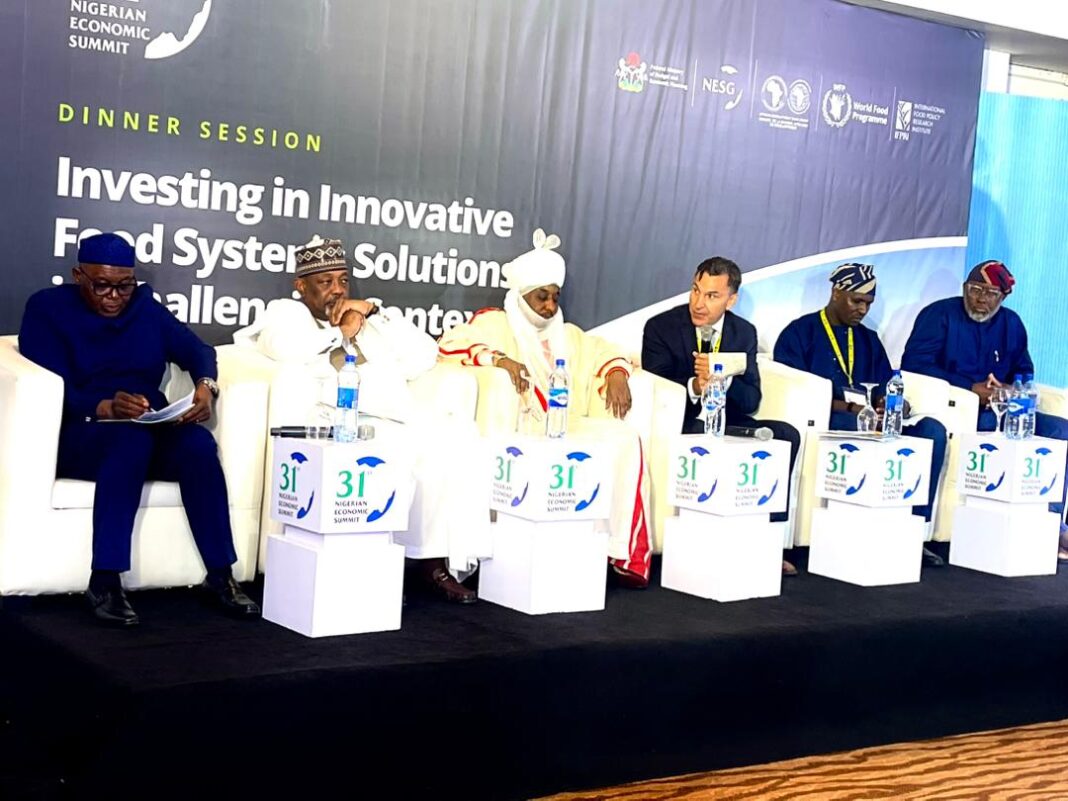
The United Nations World Food Programme (WFP) and the African Development Bank (AfDB) have called for increased investment in innovative and production-oriented food systems in Nigeria.
The UN Resident Coordinator in Nigeria, Mr Mohamed Fall, said this during a joint session of both organisations on the sidelines of the Nigeria Economic Summit in Abuja.
The event is themed: ” Investing in Innovative Food Systems Solutions in Challenging Contexts.”
According to Fall, increasing the investments will strengthen resilience and address food insecurity in fragile regions of Nigeria and across Africa.
The UN coordinator said food security was not only about agriculture, but also about peace, dignity, and stability.
He said that farmers in conflict-prone areas continued to show courage, in spite of adversity, stressing that the resilience of rural communities remained a sign of hope for national recovery.
“What we discuss today, food, innovation, resilience is not only about agriculture. It is about peace, it is about stability, it is about dignity of the people that we are serving.
“It is about the millions of Nigerians, who will work, feed this nation and feed even above this nation.
“Across the North, from Yobe to Kano, from Maiduguri to Katsina, we witness courage in the face of adversity.
“Farmers returning to their fields, women’s cooperative building market and young innovators creating smart logistics against all odds. Even in hard soil, resistance is taking root,” he said.
Fall said that a joint study by the WFP, AfDB, and International Food Policy Research Institute (IFPRI) showed that food systems in fragile contexts were not broken, but unfinished.
The UN representative said the study therefore called for more trust, investment, and partnerships to complete them.
According to him, Nigeria’s recent progress under the National Agricultural Growth Scheme-Agro-Pocket, which has tripled wheat production within one year, demonstrates what coordinated policy and investment can achieve.
He affirmed that the UN system would continue to support Nigeria’s food security agenda through programmes that reduced post-harvest losses, boost local production, and linked farmers to markets.
Dr Abdul Kamara, Director-General of the AfDB’s Nigeria Country Department, who moderated the session, said addressing food insecurity required moving from short-term humanitarian interventions to long-term investment-driven solutions.
Kamara said that, in spite of conflict and climate challenges, Nigeria still possessed huge agricultural potential that could drive economic growth, self-reliance, and improved nutrition.
“Africa must automatically move from fragmented interventions and commitments to comprehensive, action-oriented, and life-scale investments.
“These efforts should integrate humanitarian response with long-term resilience and economic growth, particularly supporting small families.
“This goal requires innovative financing mechanisms, strong national ownership, breakthroughs in technology and policy to unlock Africa’s potential, especially in the most fragile regions,” Kamara said.
Kamara recalled that the message was also reaffirmed last week at the Africa Development Bank’s Africa Resilience Forum.
He said the new joint study by the WFP and AfDB had mapped investment opportunities in Northern Nigeria’s food systems, identifying areas for value-chain development, production enhancement, and private sector participation.
According to Kamara, over 10 billion dollars has been spent on humanitarian interventions in Northern Nigeria since the onset of conflict.
He said that similar resources, if invested in production and resilience, could have transformed the region’s food security landscape.
He urged development partners, government, and the private sector to co-invest in sustainable solutions that would expand food production, strengthen storage and processing facilities, and increase access to finance for farmers.
Stakeholders at the event reaffirmed their commitment to advancing resilient food systems through inclusive investments that would promote peace, create jobs, and ensure long-term food security in Nigeria.



 and the African Development Bank (AfDB) have called for increased investment in innovative and production-oriented food systems in Nigeria.The UN Resident Coordinator in Nigeria, Mr Mohamed Fall, said this during a joint session of both organisations on the sidelines of the Nigeria Economic Summit in Abuja.The event is themed: ” Investing in Innovative Food Systems Solutions in Challenging Contexts.”)