



By Lucy Ogalue, News Agency of Nigeria (NAN)
The Abidjan-Lagos Highway stands at a decisive turning point as stakeholders shift from vision to financing, led by the African Development Bank Group (AfDB) and its partners.
Observers say that the promise of a seamless coastal highway linking West Africa’s economic powerhouses is being rekindled with the renewed vigor.
Spanning 1,028 kilometres across Côte d’Ivoire, Ghana, Togo, Benin and Nigeria, the corridor is designed to connect a region that accounts for more than 75 per cent of ECOWAS trade and a significant share of its Gross Domestic Product (GDP).
But beyond its scale, the highway represents something deeper: a test of whether Africa can deliver complex, cross-border infrastructure at scale.
The project is part of regional integration efforts under the Economic Commission for West Africa States (ECOWAS) with renewed momentum after its formal initiation around 2013.
For decades, the Abidjan-Lagos corridor has functioned as West Africa’s busiest trade route; but also one of its most inefficient.
Long border delays, fragmented road standards and congestion have turned what should be a high-speed economic artery into a costly bottleneck.
According to infrastructure experts, these inefficiencies inflate transport costs, discourage trade and weaken regional competitiveness.
The highway aims to reverse this reality. Transforming a congested coastal road into a modern, six-lane economic corridor with smart border systems, freight lanes and integrated logistics infrastructure.
Stakeholders across West Africa have continued to describe the Abidjan-Lagos Corridor as a transformative project capable of deepening regional integration, boosting trade and accelerating economic growth across the sub-region.
For the AfDB, the project is not just about transport.
According to the bank’s Director of Infrastructure, Mike Salawou, the project needs to become an economic corridor.
Salawou reiterated the need for a broader shift in thinking.
“It will support the growth of major economic hubs and improve links between large urban centres, secondary cities and rural areas within the five countries.
“The bank has inaugurated the Spatial Development Initiative to enable transformative industrialisation right along the highway, to stimulate the growth of major economic clusters,’’ he said.
He said that experience from Asia and Europe showed that highways alone did not transform economies but corridors did.
Planners estimate the Abidjan-Lagos corridor could generate up to 16 billion dollars in economic gains, support tens of thousands of jobs and serve more than 170 million people by 2050.
It is also central to the success of the African Continental Free Trade Area, which depends on physical connectivity to move goods across borders.
Estimated at about 15.6 billion dollars, the project is among the most expensive infrastructure undertakings in West Africa.
In April 2026, the AfDB, alongside ECOWAS and regional financiers, undertook a multi-country mission to mobilise funding for the project’s construction and operation.
The mission, which signals a transition from planning to investment, also exposed a deeper reality: Africa’s infrastructure ambitions are increasingly constrained not by ideas, but by capital.
ECOWAS Director of Transport, Chris Appiah, warned during the engagements that delays in securing financing, particularly for land acquisition and viability gap funding could derail the project’s momentum.
The director urged participating countries and development partners to “spare no effort to make this project a reality in the near future.”
Appiah noted that a seamless cross-border highway would significantly accelerate regional development and strengthen connectivity among member states.
Private sector participation on the project is expected to play a major role, yet investors remain cautious, citing risks related to policy consistency, currency volatility and long-term returns.
Beyond financing, coordination across five sovereign states presents another layer of complexity as each country has its own regulatory frameworks, infrastructure standards and political priorities.
Even within recent discussions, Nigeria’s Minister of Works, David Umahi, raised concerns over design standards and unequal distribution of corridor segments, noting that unresolved issues must be addressed at the highest political level.
The minister reaffirmed Nigeria’s commitment to the project, describing the Lagos-Abidjan corridor as one designed to match the scale and ambition of ongoing infrastructure projects across the country.
According to Umahi, infrastructure development remains central to the administration’s economic agenda and regional integration strategy.
To mitigate fragmentation, a supranational body, the Abidjan-Lagos Corridor Management Authority, has been established to oversee implementation.
Analysts say its effectiveness could determine whether the project succeeds or joins a long list of stalled regional initiatives.
They said if completed on the schedule time of 2030, the highway could fundamentally reshape West Africa’s economic geography.
“The project, when completed, could reduce travel time and logistics cost, improve trade flows and supply chains, grow industrial zones along the corridor, increase investor confidence, and strengthen regional integration.
“For countries like Nigeria and Ghana, it offers an opportunity to unlock coastal economic clusters and deepen participation in regional value chains,” an analyst said.
The analysts say the project is also expected to reduce transport costs by at least 25 per cent, improving competitiveness across the region.
Although land acquisition across densely populated coastal areas could trigger delays and social tensions, environmental concerns particularly coastal erosion, flooding and ecosystem disruption require careful management.
More broadly, the Abidjan-Lagos Highway reflects a larger debate about Africa’s development trajectory:
“Can the continent move from fragmented, project-based infrastructure to integrated, large-scale delivery? Can it mobilise private capital at scale while managing risks? Can regional institutions enforce coordination among sovereign states?
For the AfDB, which has already provided technical support and helped structure financing frameworks, the project is a flagship test of its development model.
Nonetheless, between ambition and delivery, the stakes are high.
The project is finally entering its investment phase after years of studies, diplomacy and delays but history offers caution as Africa has no shortage of ambitious infrastructure plans. What it lacks, often, is execution at scale.
As an analyst puts it, the Abidjan-Lagos Highway is “a test of whether Africa can deliver on its own ambitions.”
Observers say the path ahead remains unpredictable but highly consequential. Success will reshape West African trade and integration; failure risks leaving behind yet another broken promise.(NANFeatures)



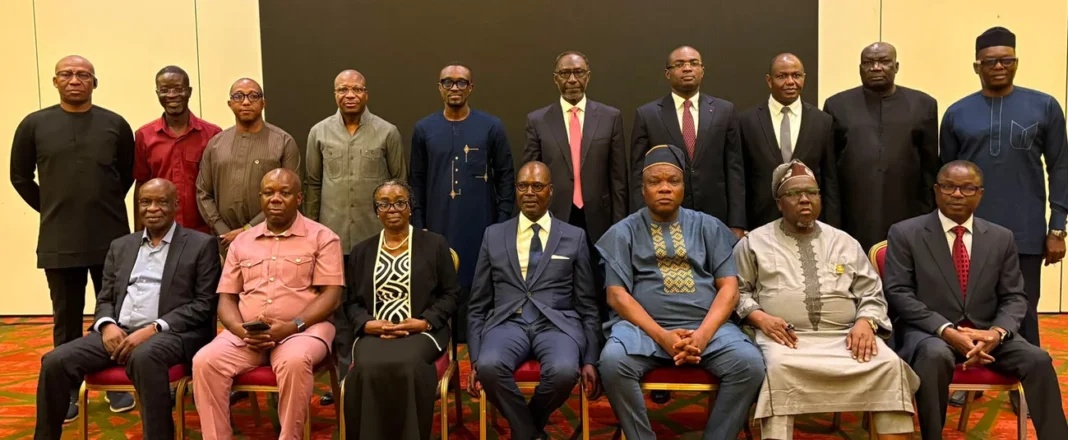

 and its partners.Observers say that the promise of a seamless coastal highway linking West Africa’s economic powerhouses is being rekindled with the renewed vigor.)