
NogreeAfrica Editorial Desk

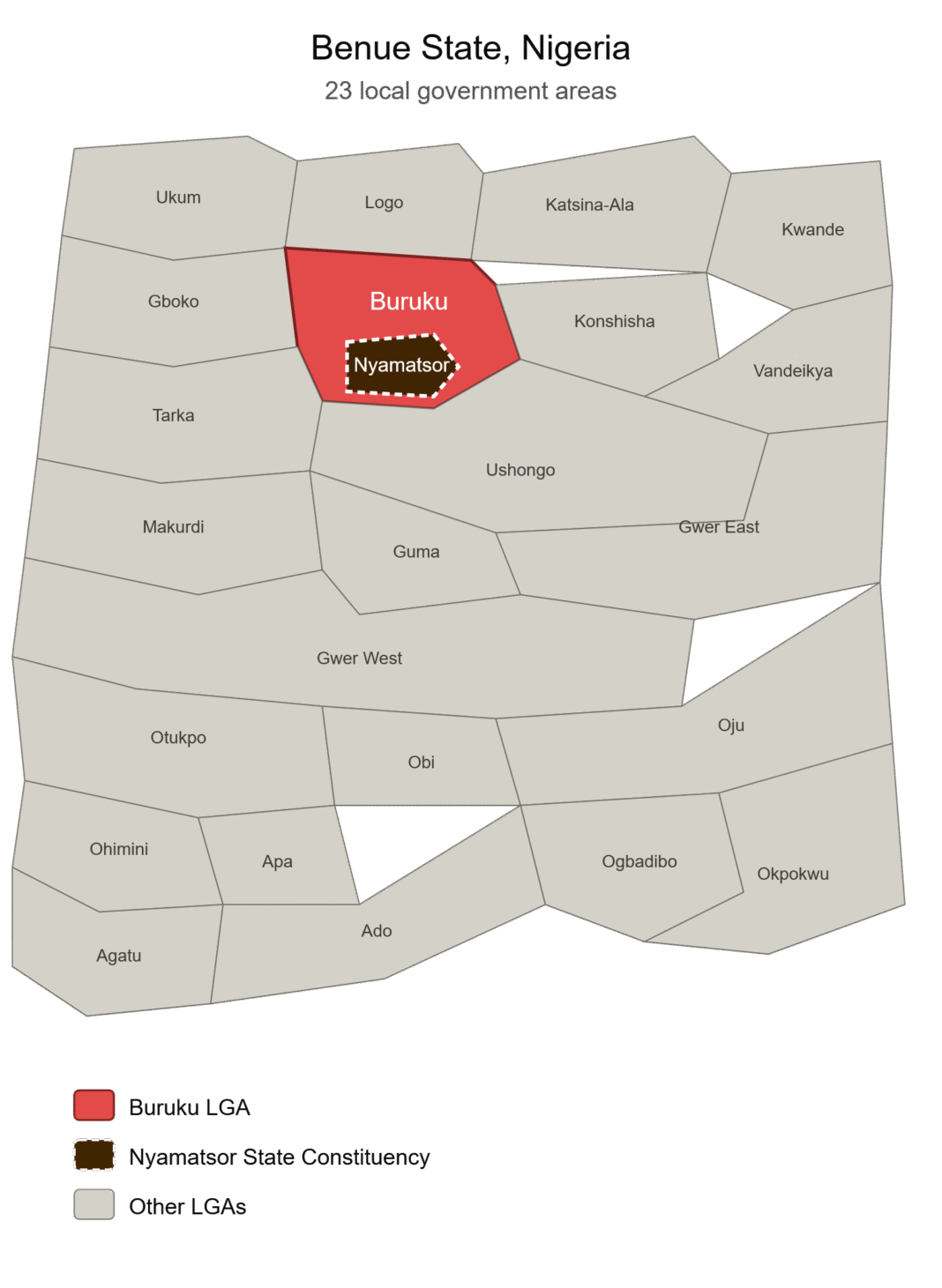
In January 2027, voters in Nyamatsor State Constituency will elect a representative to the Benue State House of Assembly for the first time since 1993. The constituency was suppressed by INEC in 1998 and restored in June 2026 after a 28 year absence from the electoral map. One of the candidates seeking that historic seat is Hon. Ephraim Teryima Agber, the All Progressives Congress flagbearer.
This is a journalistic profile of a candidate whose grassroots activities across Nyamatsor have been documented but never professionally reported. NogreeAfrica has examined what Agber has done, what he says he will do, and what the realities of the constituency demand.
Who is Ephraim Teryima Agber?
Agber hails from Tse Agber, Kusuv Ugondo, in Mbayaka Council Ward. Mbayaka is one of the eight wards that make up Nyamatsor State Constituency within Buruku Local Government Area of Benue State. He carries the APC ticket for the Nyamatsor seat in the Benue State House of Assembly.
His candidacy carries a weight that goes beyond party politics. Whoever wins this seat will be the first person to represent Nyamatsor in the Benue State House of Assembly since civilian rule returned in 1999. For Agber, this means his campaign is not just about winning an election. It is about establishing whether a constituency that was invisible for 28 years can produce a representative who commands attention.
Before office: a record of grassroots activity
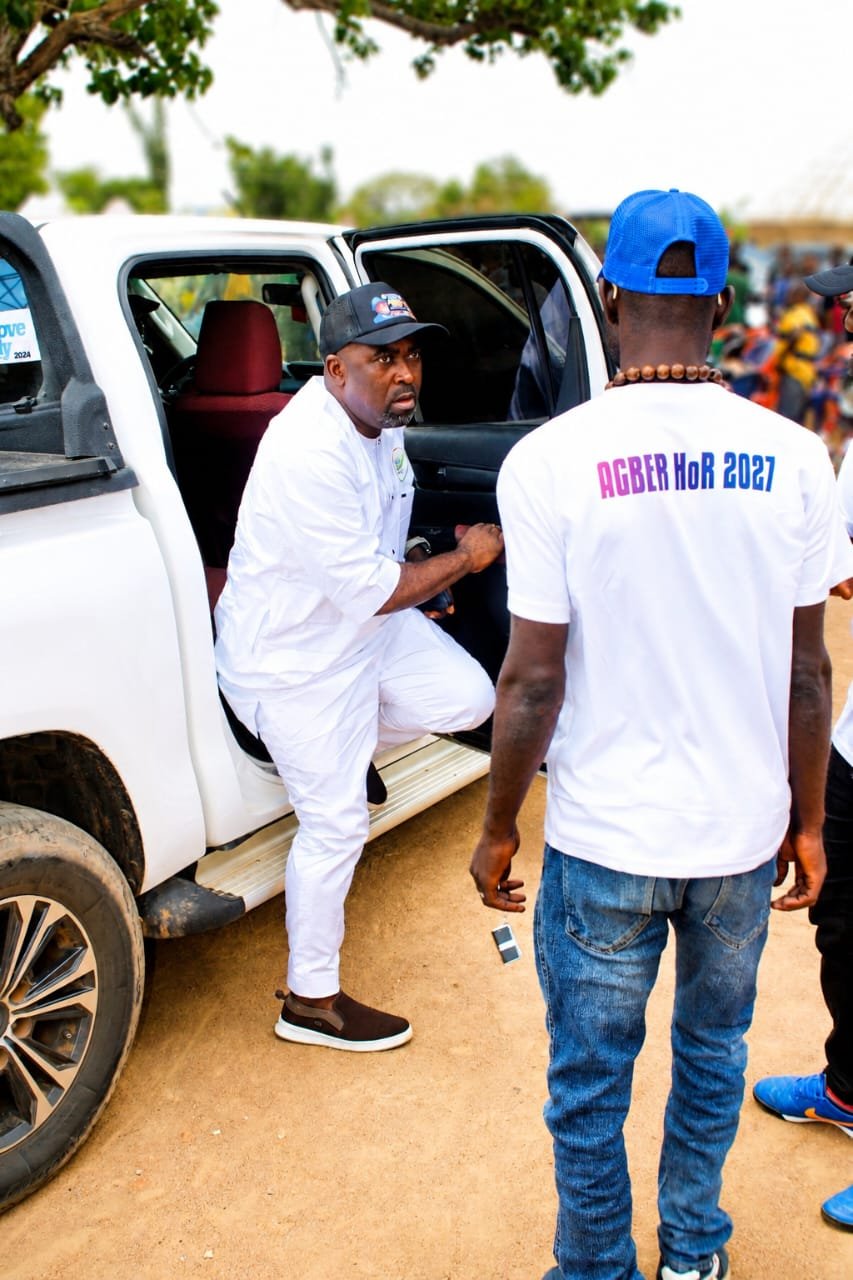
What sets Agber apart from many state assembly candidates in Nigeria is that he was active in the constituency long before the election was announced. His interventions have spanned education, skills acquisition, youth empowerment, and community engagement. Moreover, he has done all of this without holding any political office.
The record, documented through field photographs and press releases from his Yes Ahead Media Team, includes multiple distinct programmes. NogreeAfrica has verified the following activities through photographic evidence and on the ground accounts.
Laptop empowerment for over 50 Buruku indigenes
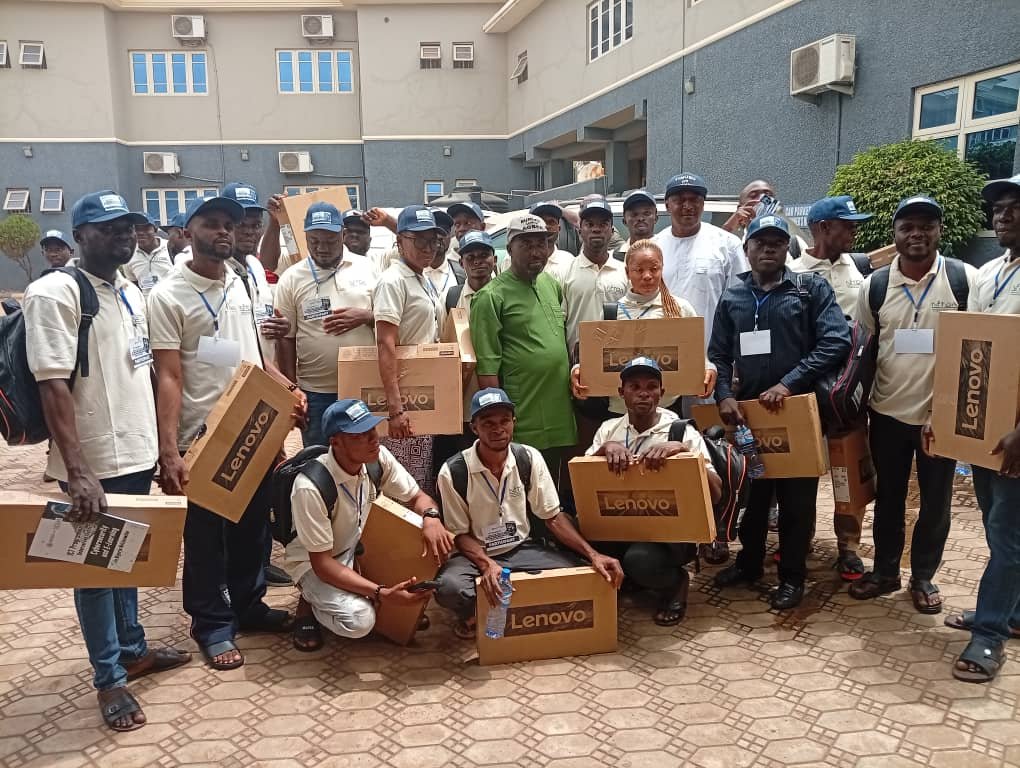
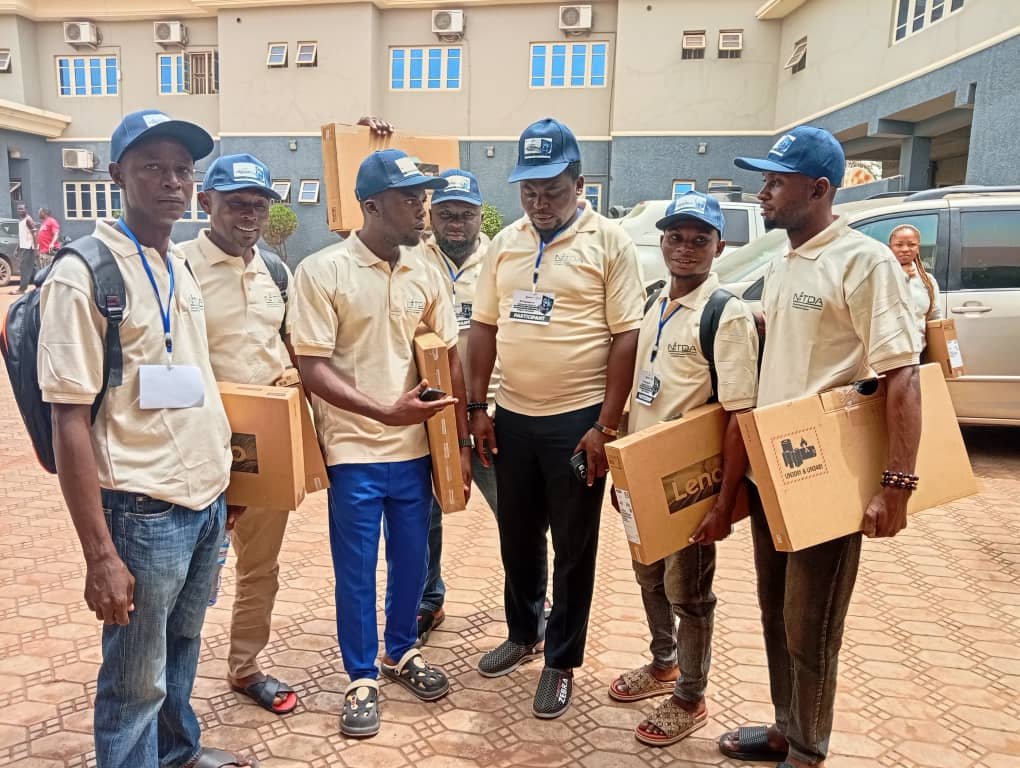
In one of his earlier interventions, Agber distributed Lenovo laptops and cash to more than 50 indigenes of Buruku. The beneficiaries, photographed in matching cream polo shirts and blue caps, received the laptops at a formal event. The exercise was designed to equip recipients with tools to pursue digital livelihoods and start small enterprises.
Skills acquisition and startup materials for youths and women
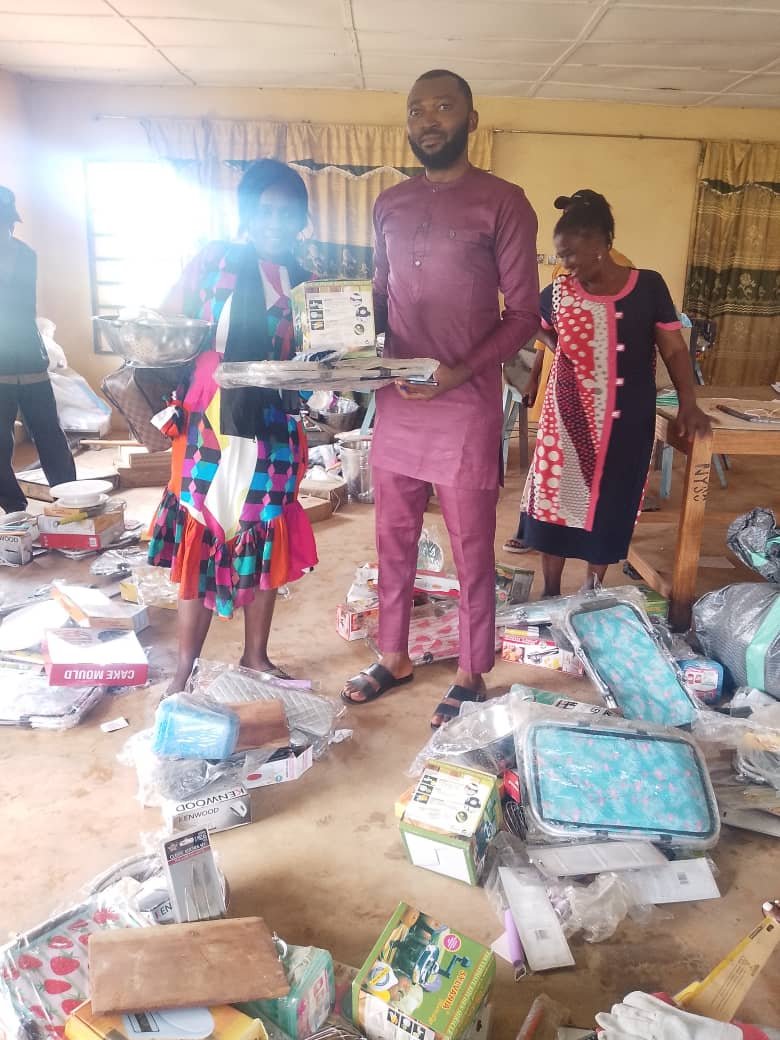
A second phase of empowerment focused on practical vocational skills. Agber organised training in chemical production, building, welding, catering, tailoring, and electrical work. Participants received startup materials and cash to help them establish sustainable sources of income.
The catering materials were documented in photographs of a room stacked with Kenwood mixer boxes, cake moulds, baking trays, and other professional equipment. These were not token gestures. Every item shown is a functional tool for running a small catering or baking business.
Education support across Nyamatsor: the book distribution programme
The most visible of Agber’s activities has been his ongoing distribution of writing materials to public primary schools across the constituency. He has launched a ward by ward distribution exercise covering eight schools in each council ward.
The materials distributed included exercise books, biros, pencils, rulers, and sharpeners. Each school received a full allocation, and the exercise books were branded with Agber’s image and campaign information. Agber conducted the distribution in person, visiting each school, addressing the pupils, and handing out materials directly.
Mbaakura Council Ward
In Mbaakura Council Ward, Agber and his team visited eight public schools. At each school, pupils assembled in the compound to receive their materials. The photographs from the Mbaakura visits show green and cream classroom blocks, grassy compounds, and rows of pupils in blue and white uniforms.
At one school, Agber high fived pupils as he moved through the compound. At another, he handed exercise books directly to young girls. In a particularly striking image, a young boy spoke into a gold microphone while Agber held up a phone to record him. These are not staged political photographs. They document a candidate interacting with the people he is asking to trust him.
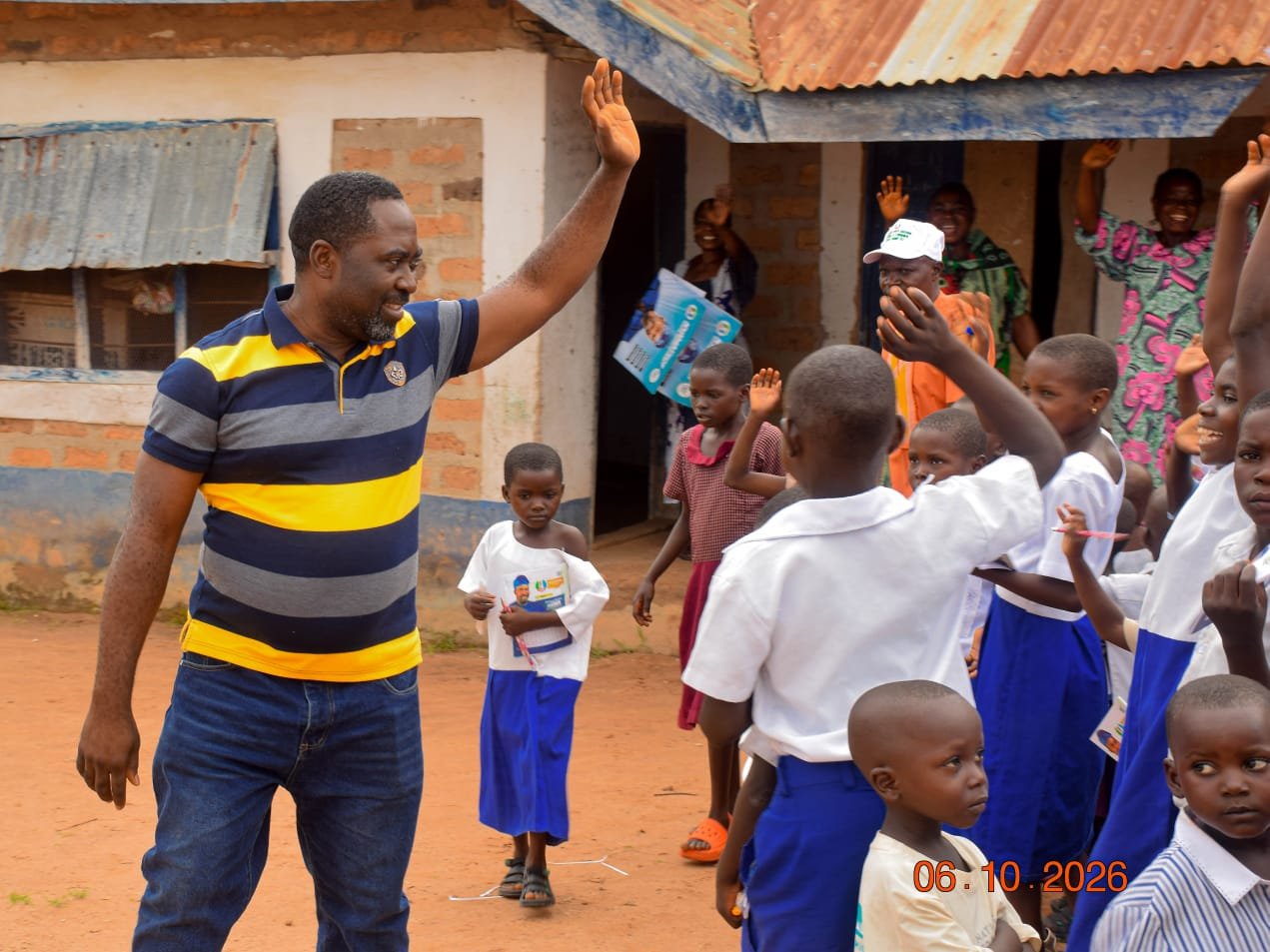
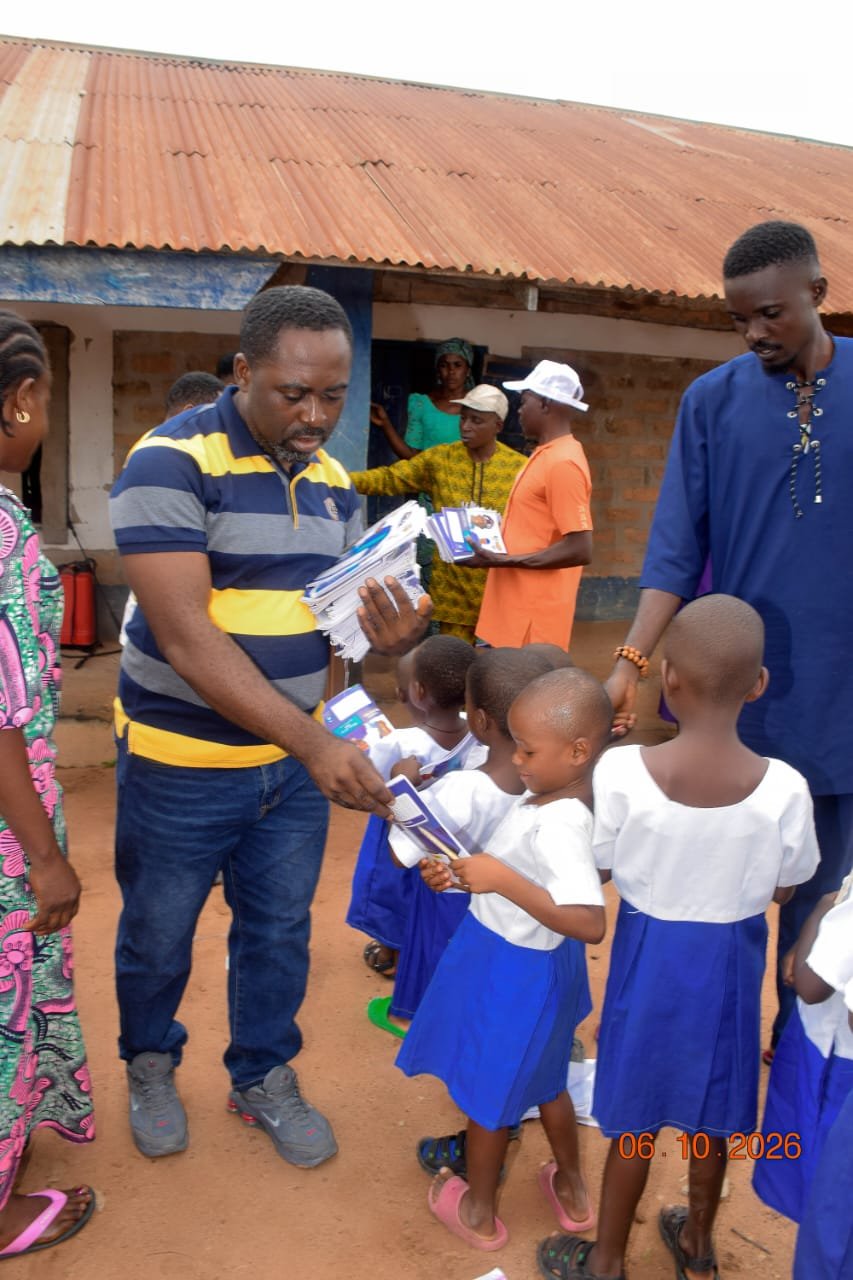
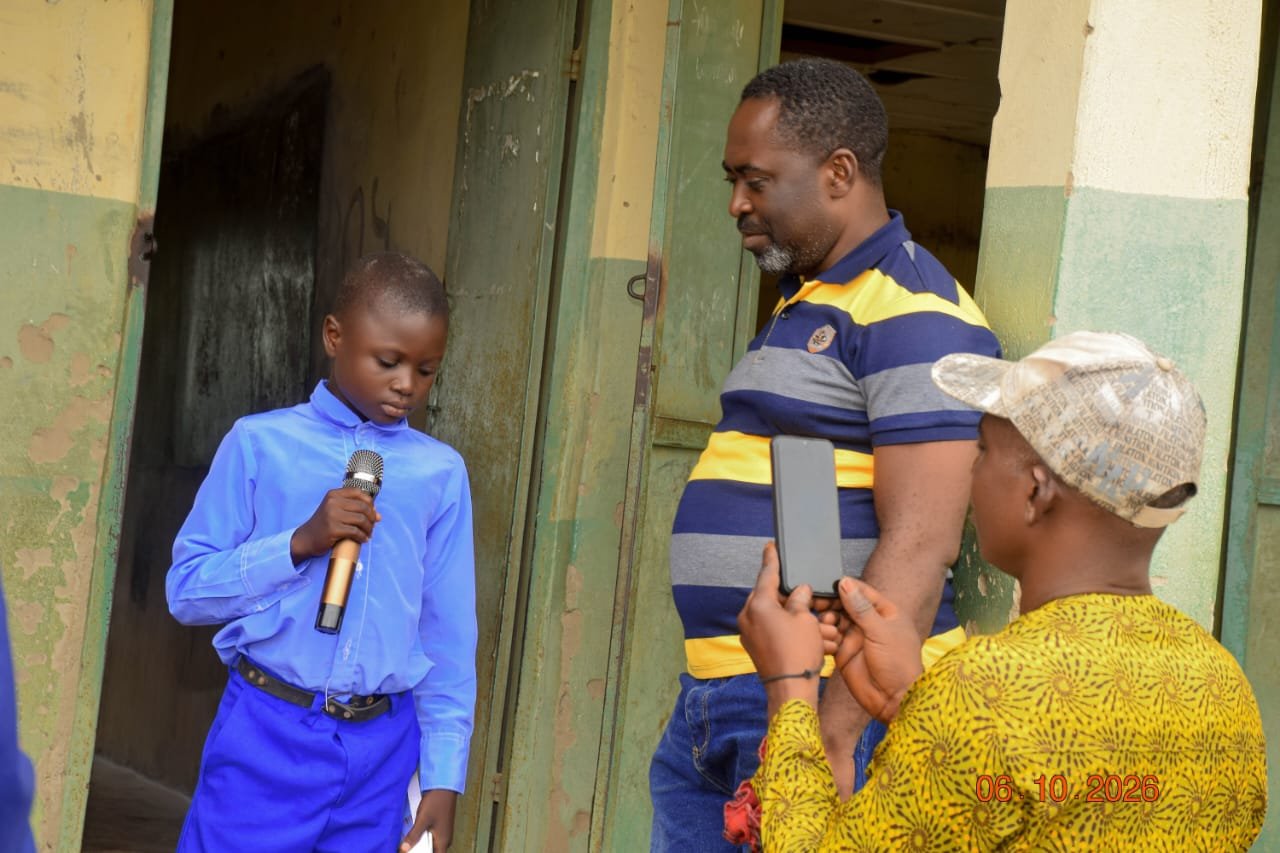
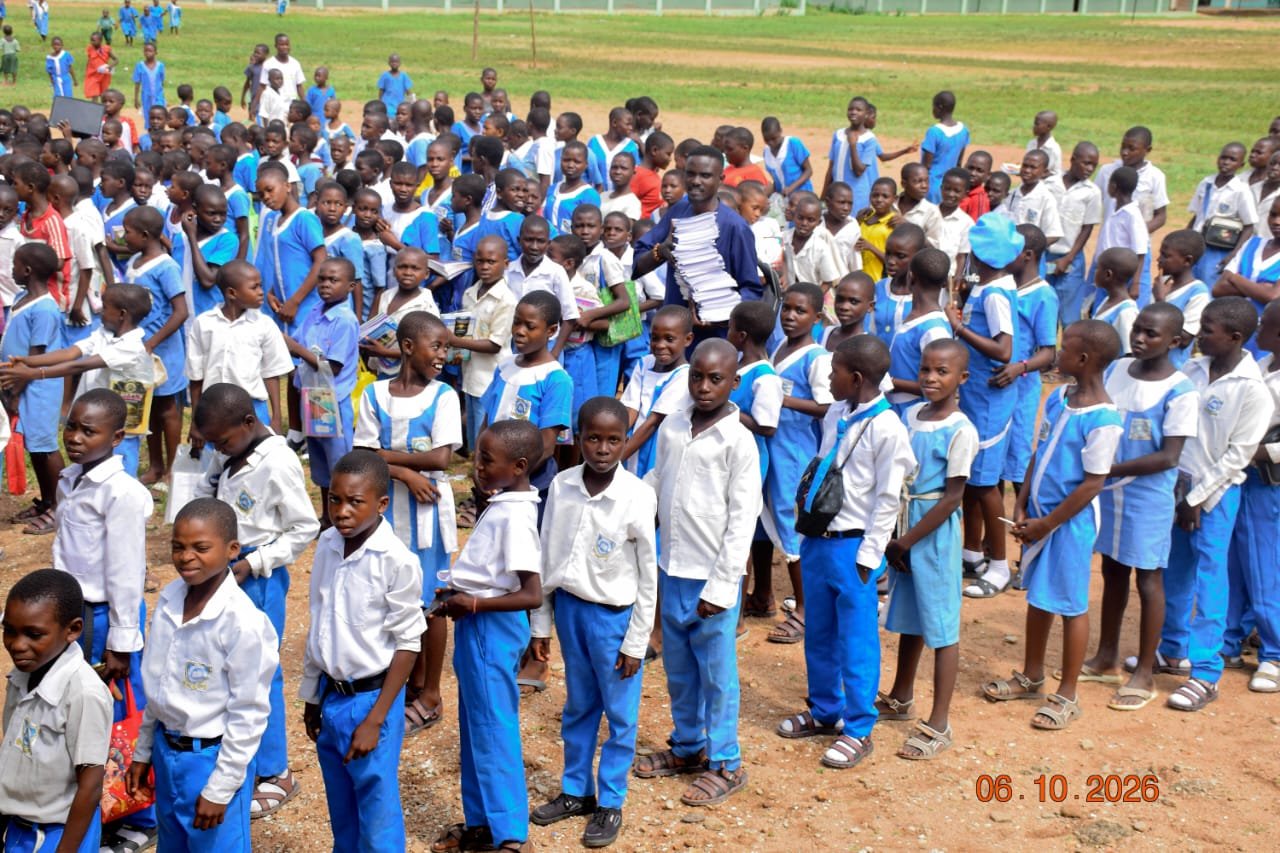
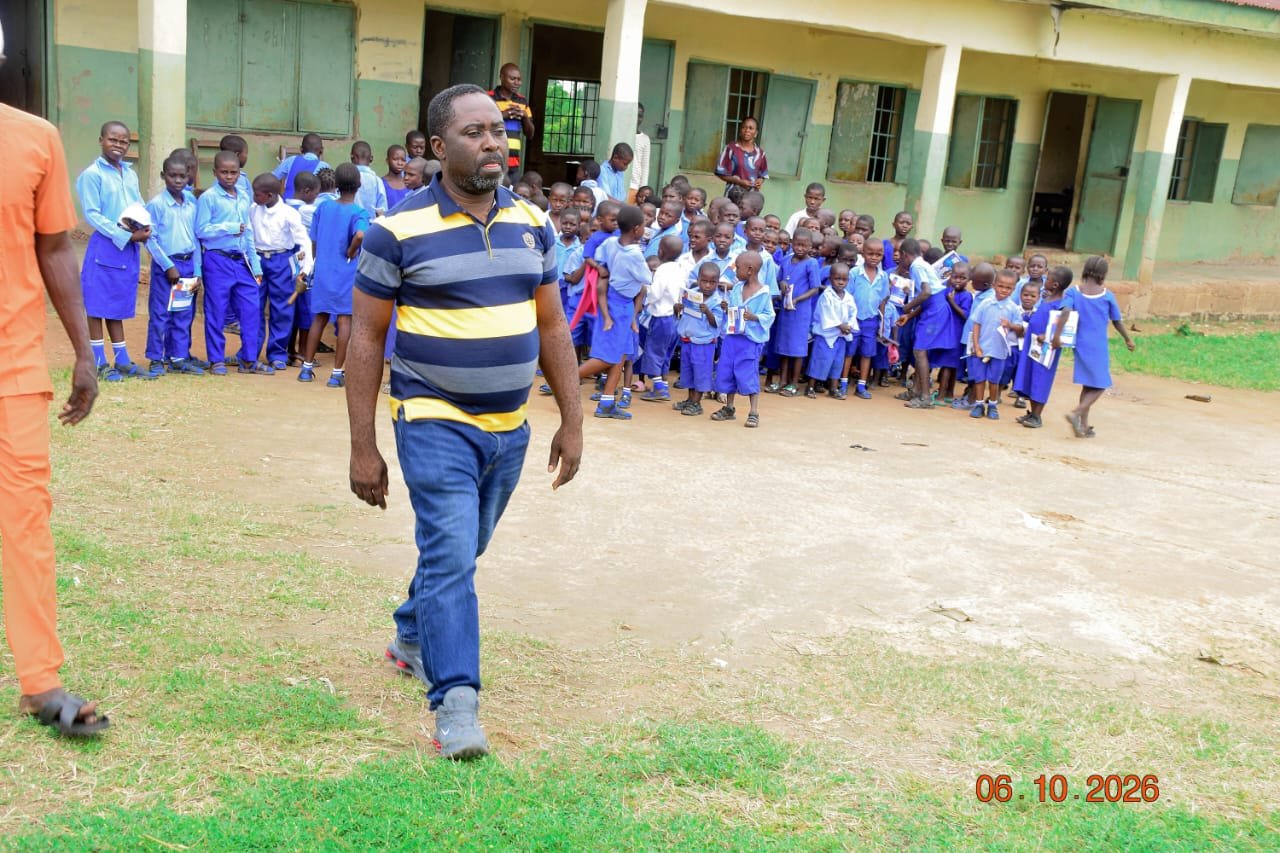
The condition of the school buildings tells its own story. Faded paint, worn window shutters, and aging classroom blocks appear in photograph after photograph. These are public schools that the federal and state governments built but rarely maintained. A candidate putting exercise books into the hands of children at these schools does not solve the infrastructure problem. Still, it acknowledges that the children are there and that someone is paying attention.
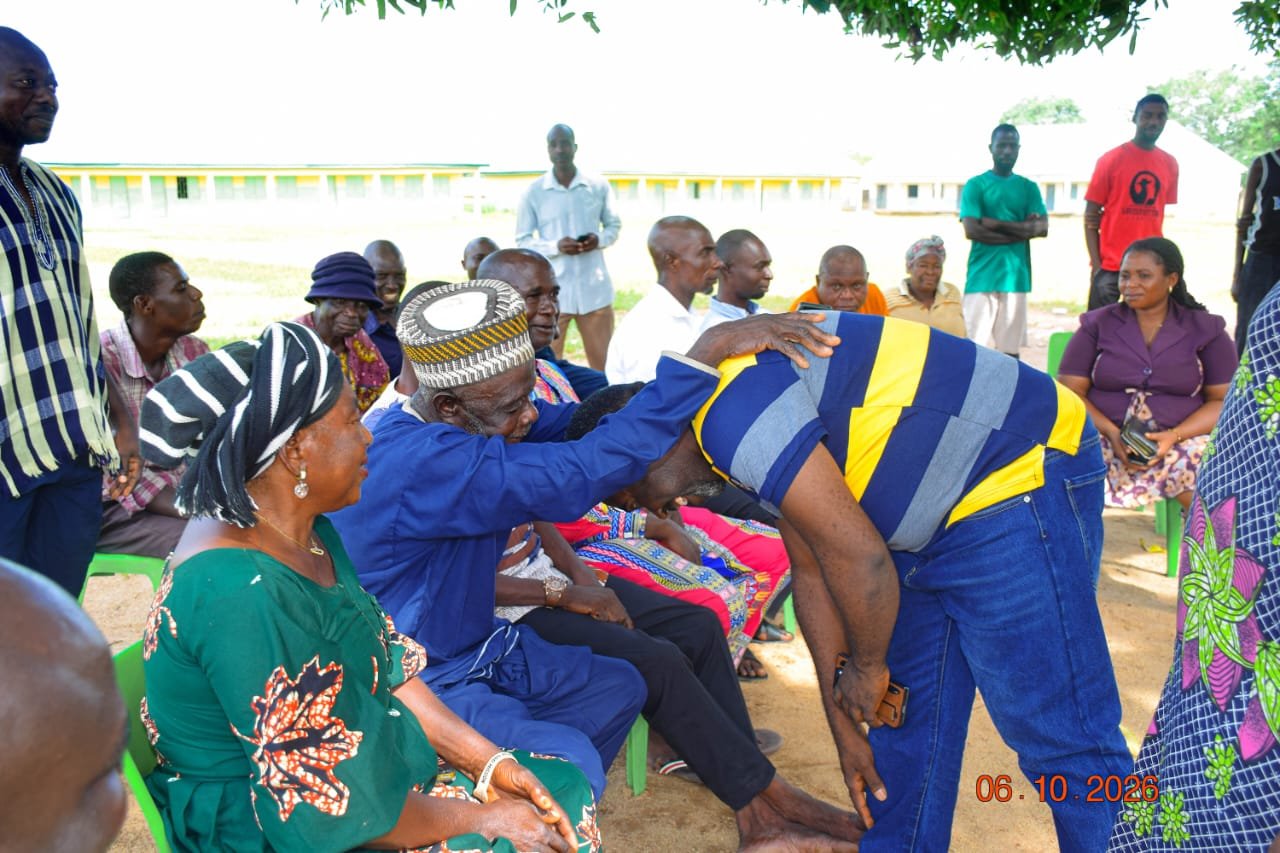
Between schools, Agber also paused to greet elders in the host communities. In one photograph, he bows to an elder in a patterned cap, a gesture of respect that Tiv communities expect from anyone who seeks their trust.
Mbaade Council Ward
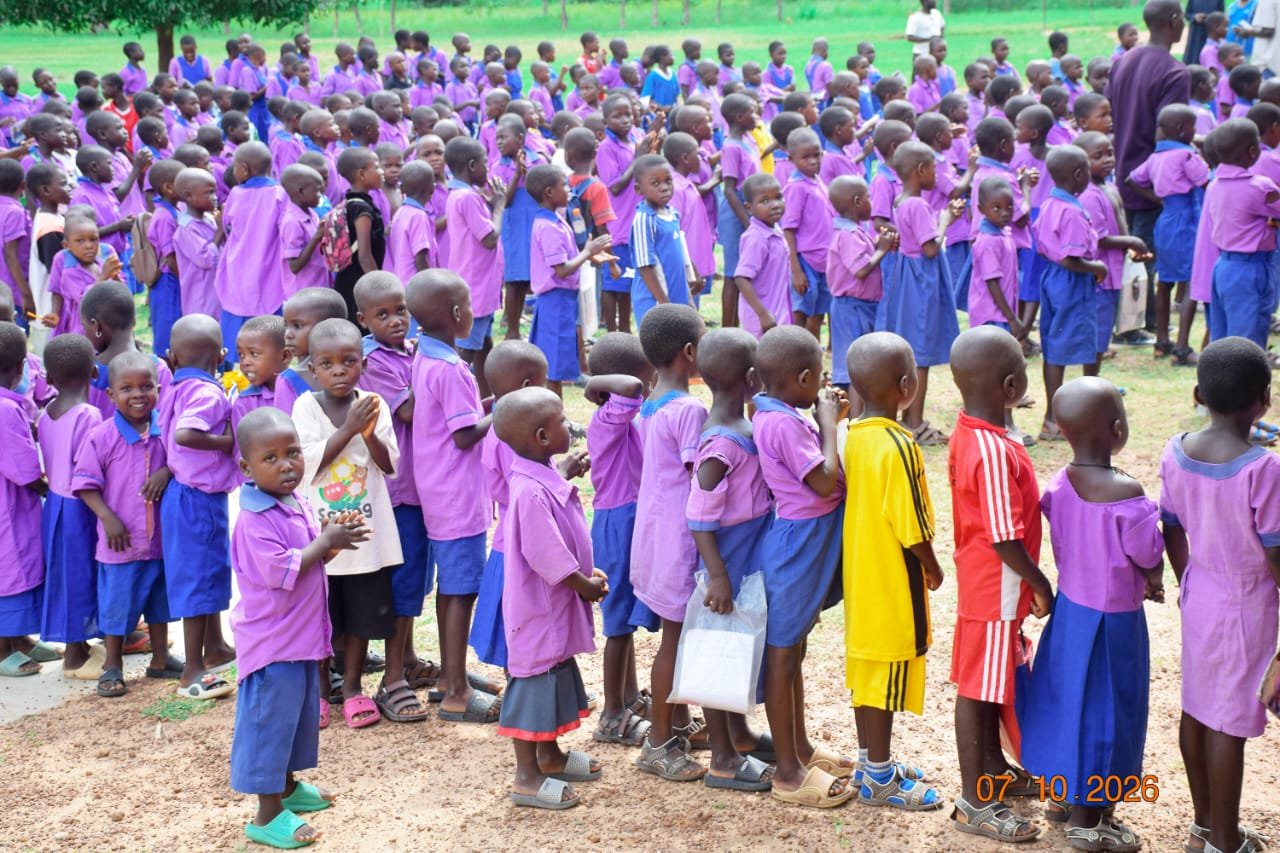
The distribution then reached Mbaade Council Ward, where another eight public schools were covered. The Mbaade visits brought a different set of schools and different uniforms: green checks, purple checks, and red and pink dresses. However, the pattern stayed the same. Agber addressed the pupils, his team distributed the materials, and the children held up their new exercise books.
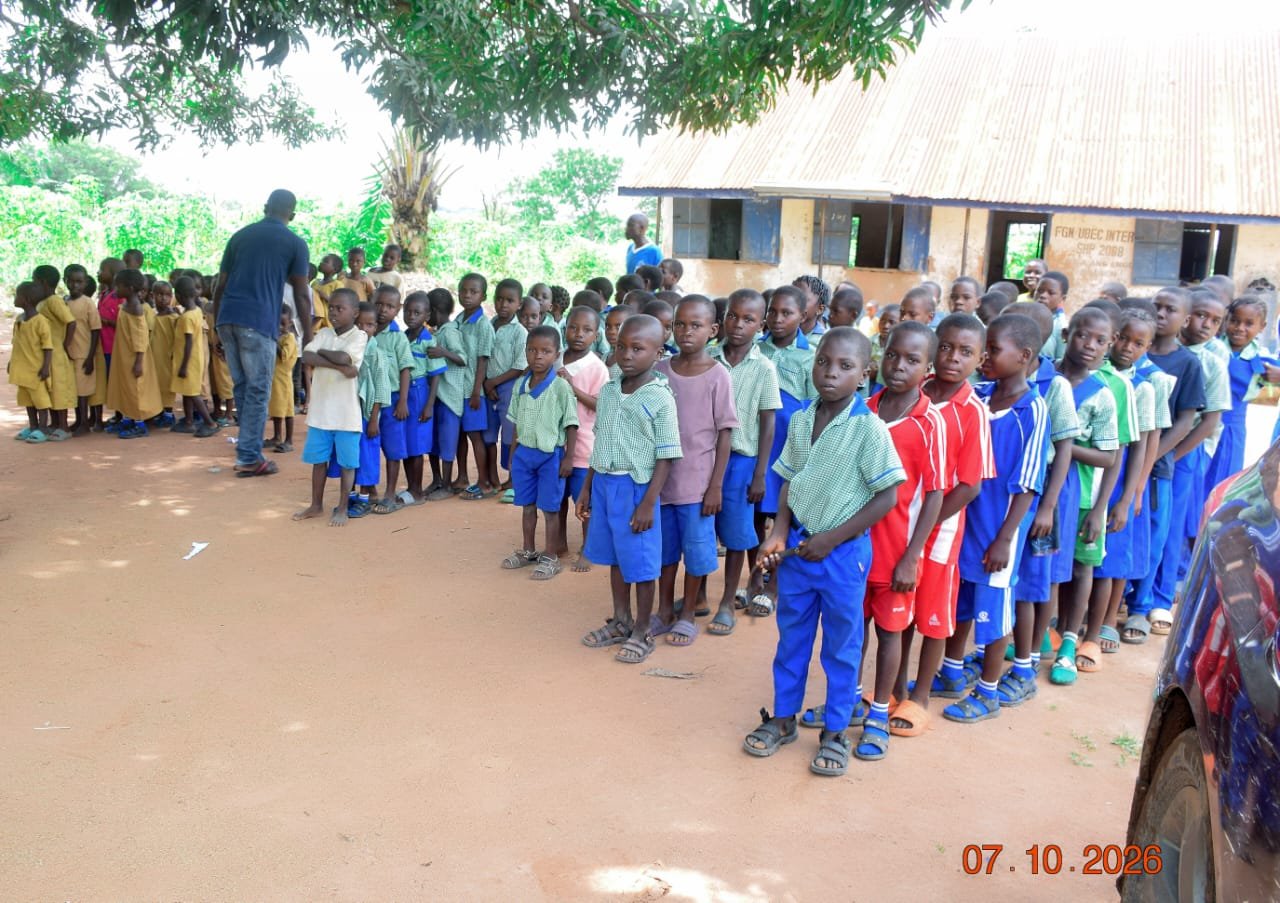
Several images from the Mbaade visits are especially powerful. At a yellow UBEC/SUBEB school, dozens of pupils raised their branded exercise books in the air while Agber, in a white polo, faced them with his hand raised. At another school, pupils in purple checked uniforms clapped and cheered as the distribution team arrived.
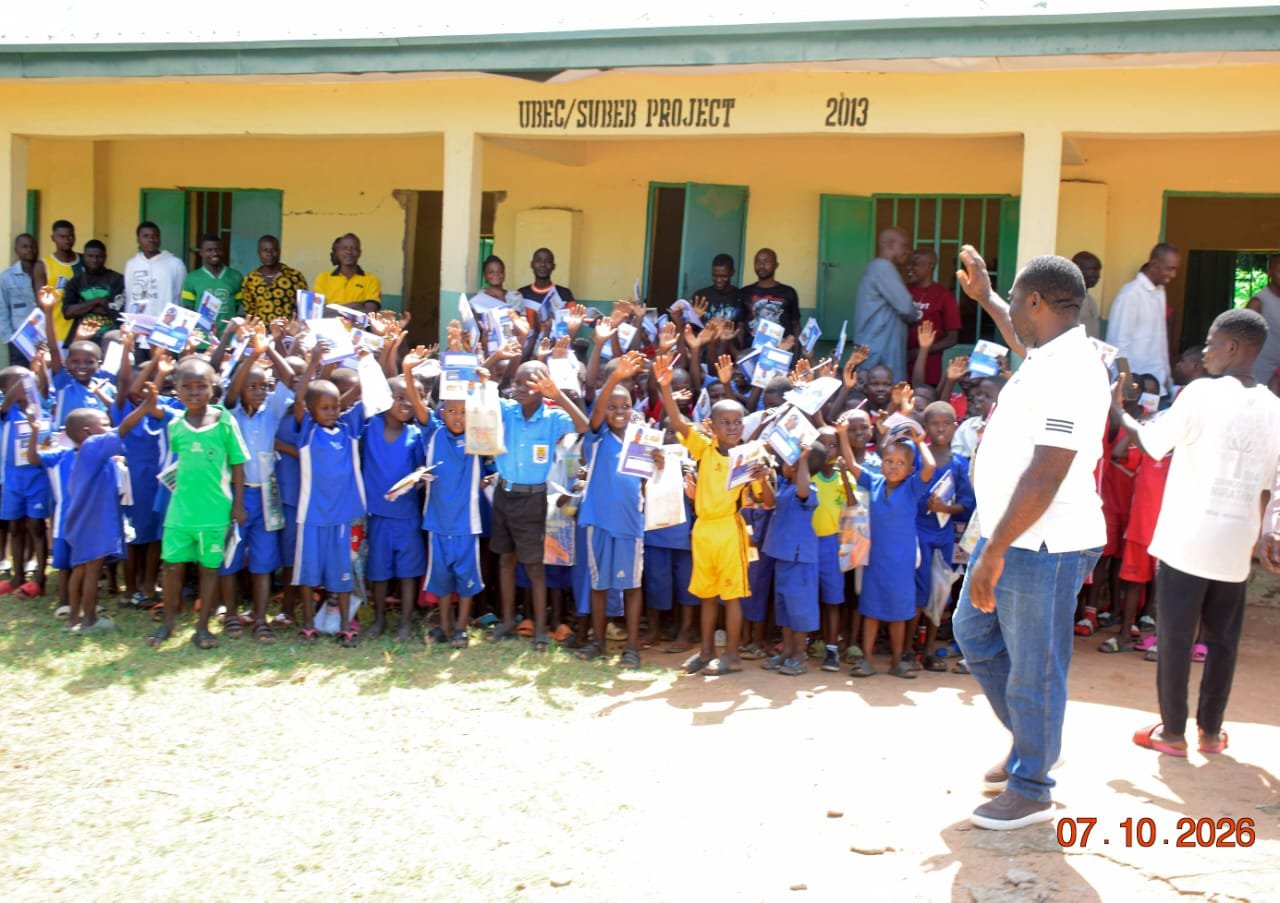
The group photographs carry the same energy. At the UBEC/SUBEB school, pupils crowded together with their books held high against the yellow walls. Elsewhere, girls in red and pink dresses displayed their branded exercise books in front of an older brown building. The contrast between the bright new books and the fading structure behind them is impossible to miss.
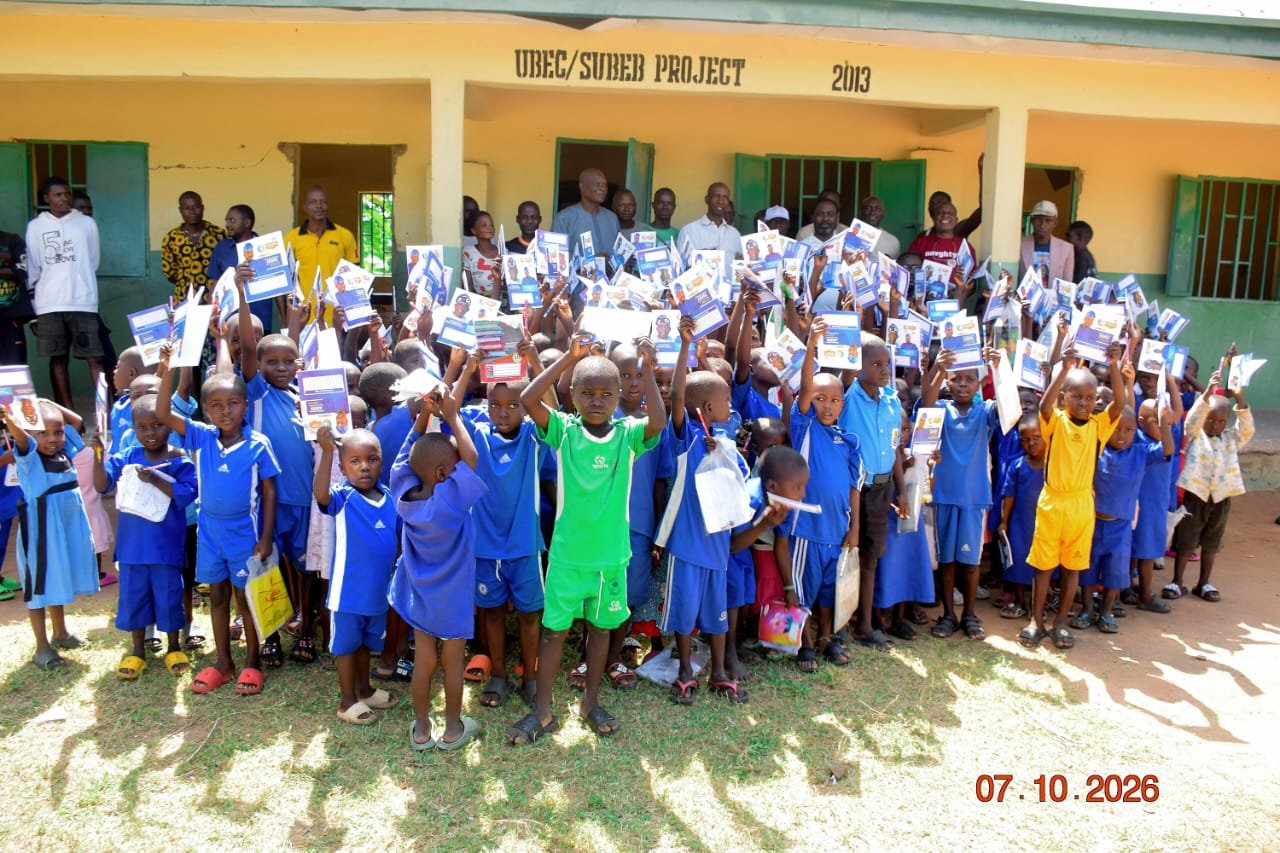
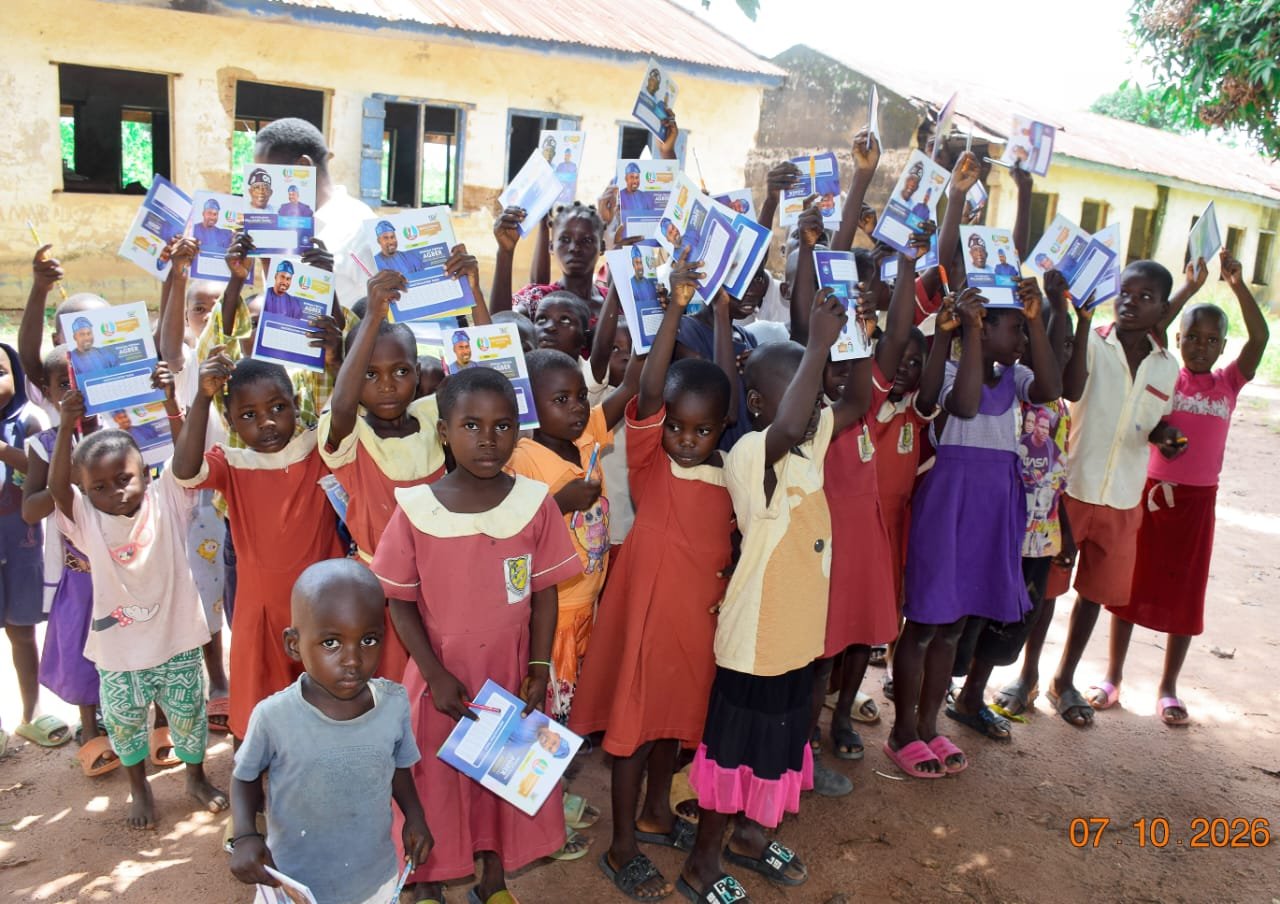
At the last stop shown in the record, Agber stood on the red earth of a school compound beside a long line of pupils, the green roof of the classroom block behind them. Before leaving one of the schools, he stopped to shake hands with a small pupil while an elder looked on, smiling.
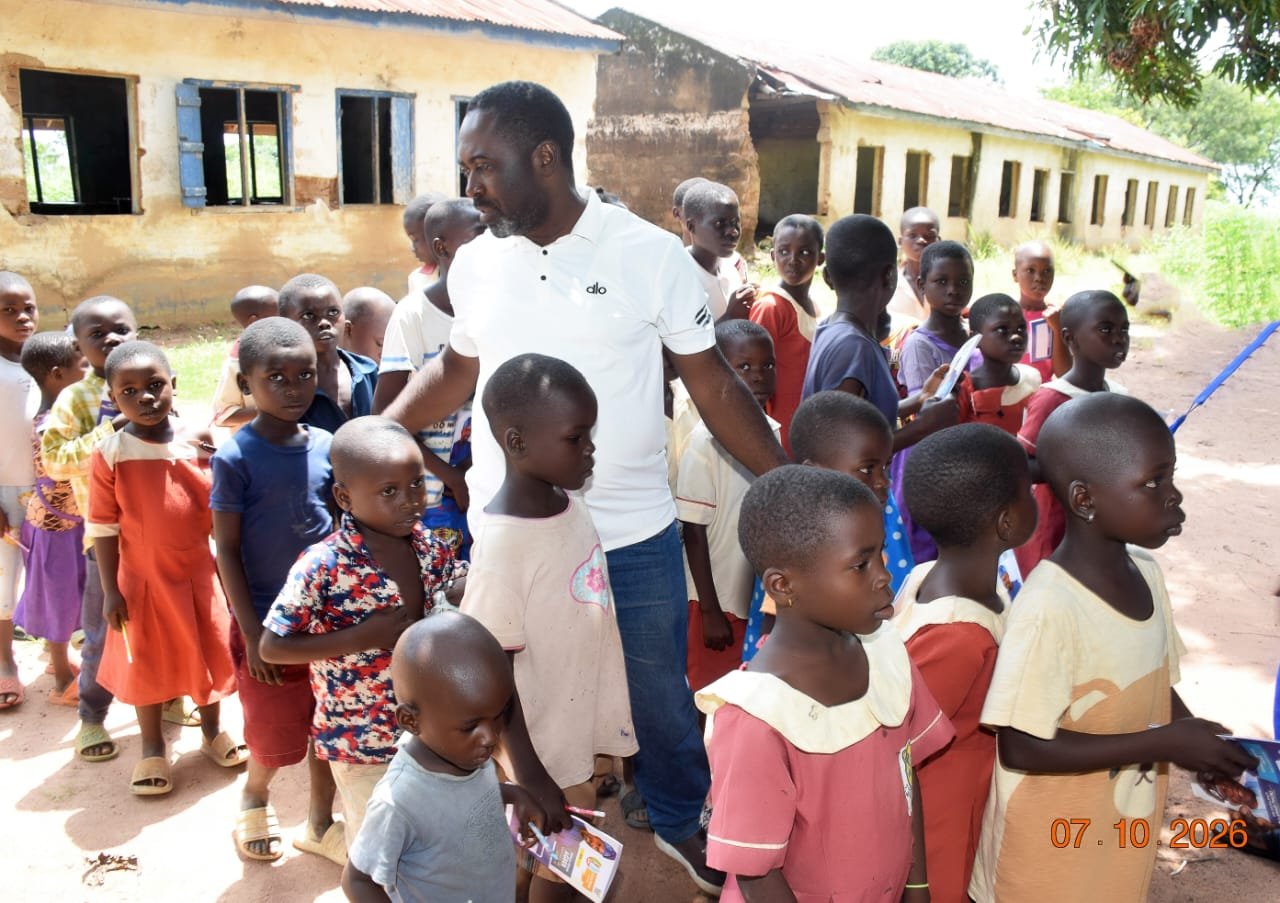
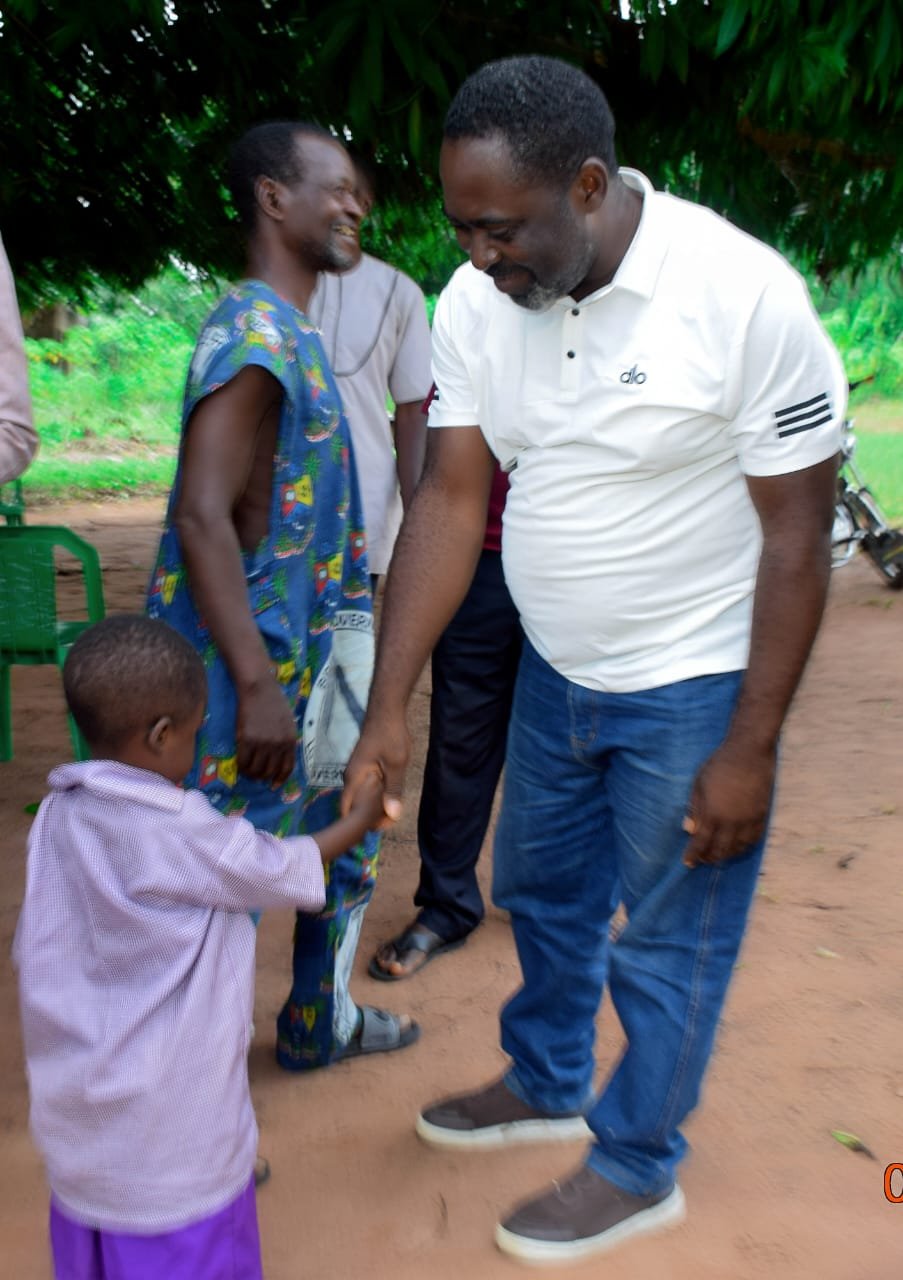
The distribution is expected to continue across the remaining six council wards: Mbakyaan, Mbayaka, Mbatyough, Mbazagee, Etulo, and Shorov. Once completed, Agber’s team will have visited public schools in all eight wards of the constituency before a single ballot is cast.
Community engagement and cultural presence
Beyond the school visits, Agber has maintained a visible presence at community events across the constituency. Two engagements stand out in the record.
The New Yam Festival at Tse Agber, Mbayaka
Agber hosted a New Yam Festival celebration at his hometown of Tse Agber in Kusuv Ugondo, Mbayaka Council Ward. The event brought together family, friends, supporters, and party faithful. As part of the celebration, Agber interacted with coaches from across the constituency who are involved in the Nyamatsor Unity Cup, a football competition organised under his name.
The significance of the festival is cultural as well as political. Agber has said that, in future, he wants the New Yam Festival celebrated across all of Nyamatsor, bringing communities together to honour Tiv culture and strengthen unity.
The Ugondo Youth engagement
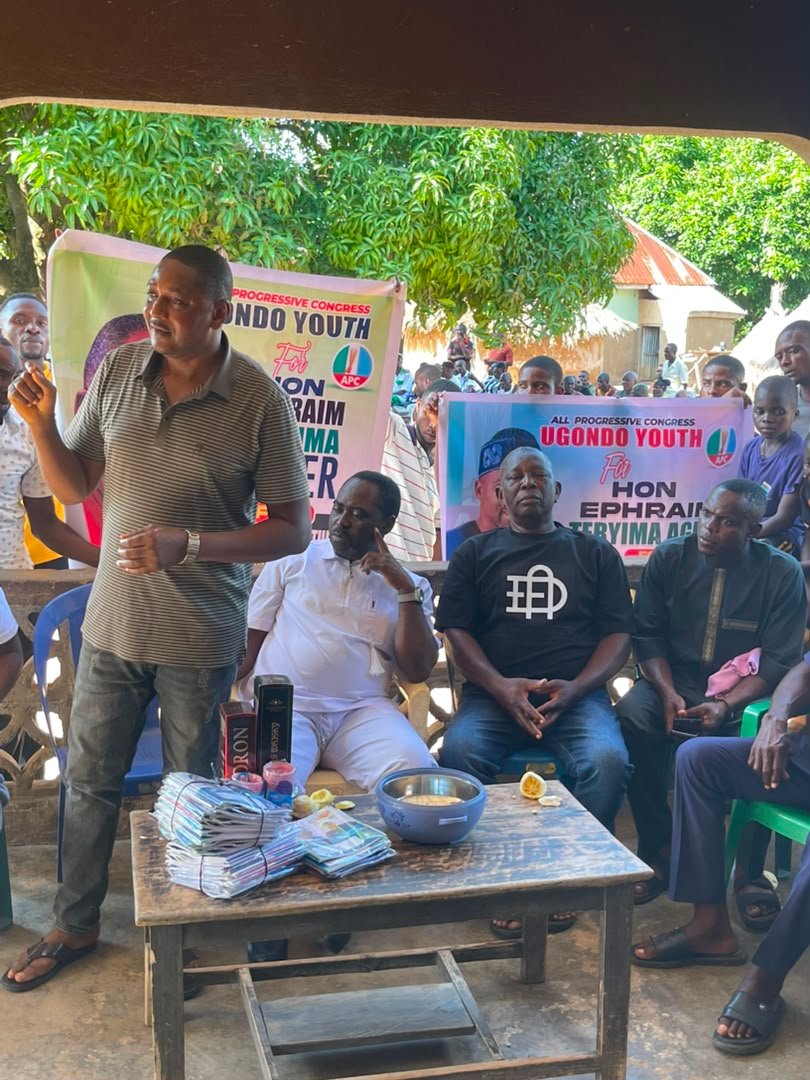
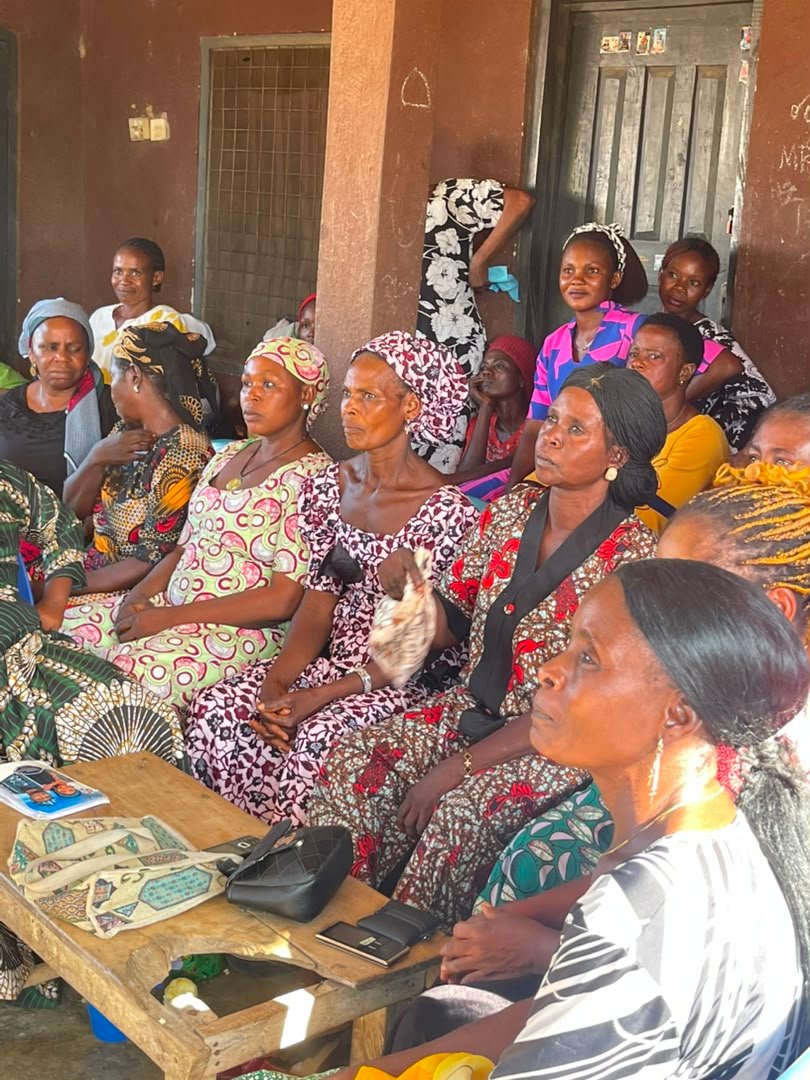
At a separate event, Agber met residents of Ugondo in Mbayaka Council Ward at a community gathering organised by APC Ugondo Youth. Men, women, and elders sat together under a corrugated roof, with APC Ugondo Youth banners displayed behind the speakers.
In one image, a supporter in a yellow shirt stands to address the gathering. In another, the women of the community sit together behind a wooden table, their head ties neatly in place and their attention fixed on the discussion. These are not rally photographs. They capture a constituency conversation, the kind of face to face engagement that decides elections in rural Nigeria.
Documented interventions at a glance
The challenge ahead
Distributing exercise books and laptops is one thing. Representing a constituency that has been absent from the state legislature for 28 years is another matter entirely.
Nyamatsor State Constituency faces challenges that no amount of writing materials can address. The school buildings in the distribution photographs tell part of the story: aging structures, fading paint, and compounds that show decades without dedicated legislative attention.
Furthermore, whoever wins this seat will be building from the ground up. There is no existing constituency office. There is no record of state budget allocations to Nyamatsor as a standalone constituency. Nor are there established relationships between the constituency and state ministries. The winner will have to create all of this while meeting the expectations of voters who have waited a generation for their own representative.
For Agber, the task is to carry the grassroots energy of his empowerment programmes and school visits into the legislative work the constituency needs. Distributing materials demonstrates commitment. In the Assembly, a member must also navigate the Benue State House of Assembly, secure budget allocations, attract state and federal intervention programmes, and hold government agencies accountable for service delivery in the constituency.
Because Nyamatsor has never had a representative in the current democratic dispensation, there is no template for what success looks like here. The first member will write it.
All photographs used in this article are credited to the Yes Ahead Media Team and verified by NogreeAfrica.