
An Editorial | UNGA 81: Developing Story
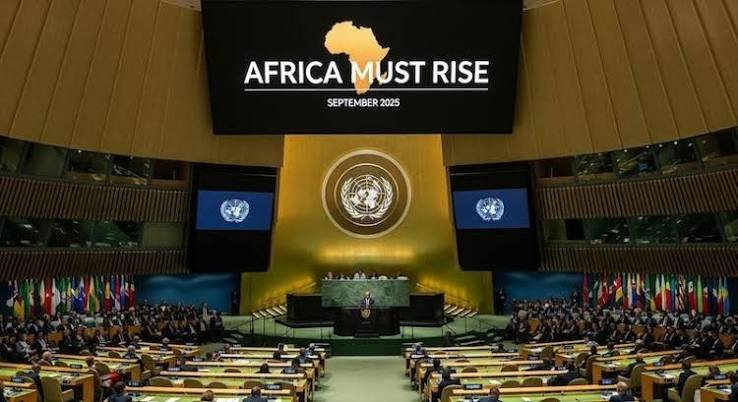
When the 81st session of the United Nations General Assembly opened in New York on 22 September 2026, the most powerful nations in the world came to the podium with familiar scripts. But tucked between the rehearsed platitudes of established powers, a handful of African leaders arrived with something different: a coordinated, unapologetic demand for the continent to stop being governed by a world order it had no hand in designing.
This is a developing story. The general debate runs through 28 September, and more African heads of state are still scheduled to speak. But what has already been said from the podium, and just as critically, who chose not to show up, paints a revealing picture of where African leadership stands at this pivotal moment in multilateral diplomacy.
Kenya’s President William Ruto delivered what may be the most consequential African address of this session. Speaking on 23 September, Ruto traced the founding of the United Nations in San Francisco in 1945 to Kenya’s own admission in 1963, then confronted the assembly with a blunt assessment: the institution still matters, but it no longer matches the world it was built to govern. He pointed to the concentration of permanent power among five countries on the Security Council and argued that the remaining 188 member states are shut out of the room where the most consequential decisions are made. Africa, home to 54 nations and 1.4 billion people, has no permanent seat. Ruto’s message was unambiguous: Africa does not seek charity or special treatment but a fair opportunity and a meaningful voice in shaping a common future.
Ruto did not stop at institutional reform. He challenged one of the most persistent myths about African development, the idea that the continent lacks capital. Speaking at a sideline roundtable alongside former Nigerian President Olusegun Obasanjo and industrialist Aliko Dangote, Ruto argued that Africa’s pension funds sit on billions that cannot be deployed locally because international financial rules and inflated risk premiums steer capital away from the continent’s own infrastructure. He proposed opening Kenya’s default and recovery data to credit rating agencies and insurers, letting evidence rather than political assumptions set the terms. He also pitched the proposed 17.6 billion dollar East Africa Refinery in Lamu and co-led the Artificial Intelligence Middle Powers Initiative. This was not diplomacy for its own sake. It was economic combat dressed in a suit.
Sierra Leone’s President Julius Maada Bio, who coordinates the African Union’s Committee of Ten on Security Council reform, opened the debate on the first day with a speech that cut to the bone of global hypocrisy. Bio noted that global military expenditure hit nearly 2.9 trillion dollars in 2025, the eleventh consecutive annual increase, and asked a question that no one in the hall could answer comfortably: how can the world spend trillions on war while millions struggle for basic development? He warned that military action may contain a threat but it cannot by itself build lasting peace. He demanded permanent African seats on the Security Council with full veto rights. And he issued a pointed warning about the global green energy transition: the minerals driving that transition come overwhelmingly from African soil, and the continent must not be reduced to raw material extraction once again. The green transition, he said, must not reproduce the extractive terms of the past.
Angola’s President João Lourenço, speaking in the year that marks the 50th anniversary of Angola’s membership of the United Nations, called for the strengthening of the organisation’s central role in promoting peace and dialogue and reaffirmed Angola’s commitment to resolving African conflicts through African-led mediation. He called for the effective implementation of Security Council Resolution 2719, which is meant to provide sustainable funding for African Union peace operations, funding that has been promised but never reliably delivered.
The absences are as telling as the speeches. Nigeria’s President Bola Tinubu skipped the assembly for the third consecutive year, sending Vice President Kashim Shettima in his place. South Africa’s Cyril Ramaphosa stayed home on medical advice, represented by Foreign Minister Ronald Lamola. Egypt’s Abdel Fattah el-Sisi, listed to speak on opening day, instead dispatched his Prime Minister. Three of Africa’s largest economies were represented not by their principals but by understudies on the most visible diplomatic stage in the world.
The contrast is stark. The leaders who showed up, Ruto, Bio and Lourenço, came with substance: reform proposals, financing challenges and institutional demands backed by data and history. The leaders who stayed home left their delegations to deliver speeches that, however competent, carry less diplomatic weight in the corridors of New York where bilateral meetings shape real outcomes.
Africa’s push at the 81st session of the United Nations General Assembly is not yet over. More speeches are coming from Senegal’s Bassirou Diomaye Faye, Ghana’s John Mahama, Sudan’s Abdel Fattah al-Burhan and others. But the pattern is already clear: the continent’s most forceful voices this week belong to the leaders who boarded the plane.
This is a developing story. NoGreeAfrica will update this editorial as further speeches are delivered through 28 September.