

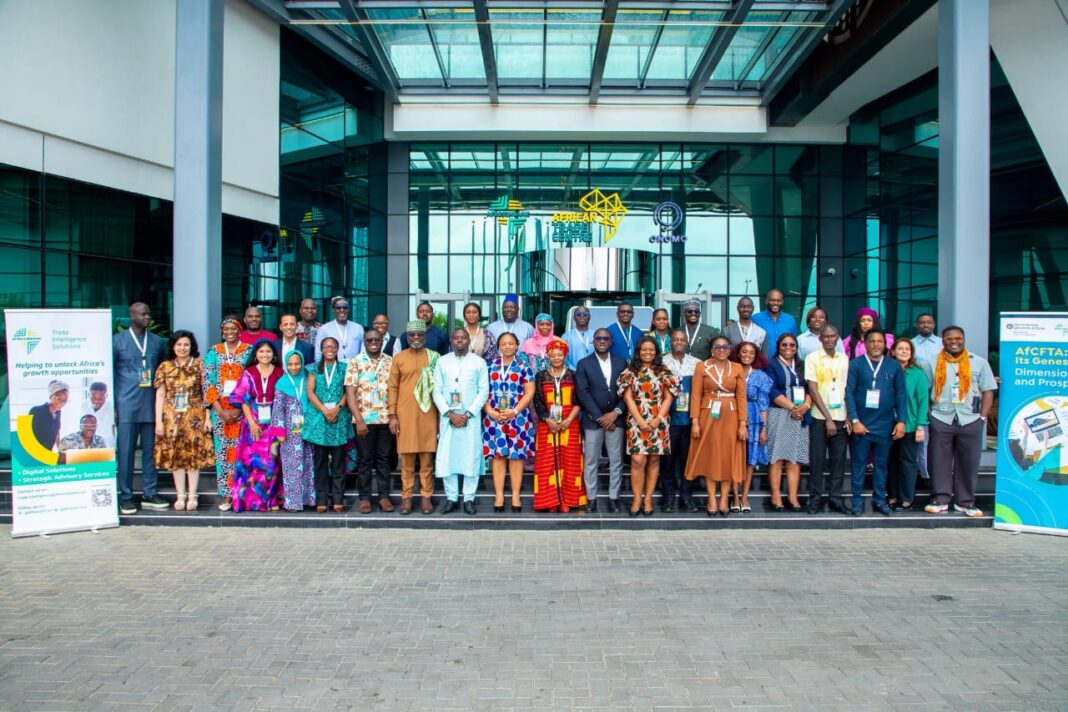

The African Export-Import Bank (Afreximbank) has reaffirmed its commitment to empowering African businesses for success under the African Continental Free Trade Area (AfCFTA), following a three-day high-level training hosted at its Africa Trade Centre in Abuja.
The programme, titled “Genesis, Dimensions, and Prospects of the AfCFTA for African Corporates,” was organised by Afreximbank’s Research and Trade Intelligence units in collaboration with the AfCFTA Secretariat and the African Union Commission (AUC).
The intensive sessions bridged the gap between policy and practice, equipping corporate participants with a deeper understanding of Africa’s $3.4 trillion single market, its protocols, trade frameworks, and emerging sector opportunities.
Dr. Yemi Kale, Afreximbank’s Group Chief Economist and lead facilitator, said the training focused on giving businesses the tools to act, not just react, in the AfCFTA landscape.
“Our goal was to demystify the AfCFTA for businesses and give them the confidence and competence to expand across borders,” Kale said.
Participants explored modules on market entry strategy, dispute resolution, and risk mitigation, with insights drawn from the AfCFTA Guided Trade Initiative. They also engaged with Afreximbank’s trade-enabling platforms such as the Pan-African Payment and Settlement System (PAPSS), the Africa Trade Gateway (ATG), and tailored financial instruments.
Speaking during the closing session, Mr. Alain-Thierry Mbongue, Senior Manager, Afreximbank, reiterated the Bank’s holistic support for African corporates.
“It’s not just about finance,” Mbongue said. “We are building ecosystems that help businesses navigate policy, technology, and markets more effectively.”
One of the participants, Ms. Chiamaka Nwosu, a logistics executive, described the training as transformational.
“This programme opened my eyes to opportunities in trade logistics I hadn’t considered. Afreximbank has truly given us the keys to unlock AfCFTA potential,” she said.
With initiatives like this, Afreximbank continues to drive continental integration by empowering private sector actors to turn policy into performance.



 has reaffirmed its commitment to empowering African businesses for success under the African Continental Free Trade Area (AfCFTA), following a three-day high-level training hosted at its Africa Trade Centre in Abuja.The programme, titled “Genesis, Dimensions, and Prospects of the AfCFTA for African Corporates,” was organised by Afreximbank’s Research and Trade Intelligence units in collaboration with the AfCFTA Secretariat and the African Union Commission (AUC).)